

To build an online brand, decide who you serve and what you sell, give it a name and a consistent identity, launch a fast website or online store, then show up where your customers already spend time: search, social media and email. What turns a store into a brand is consistency, proof and repeat customers.
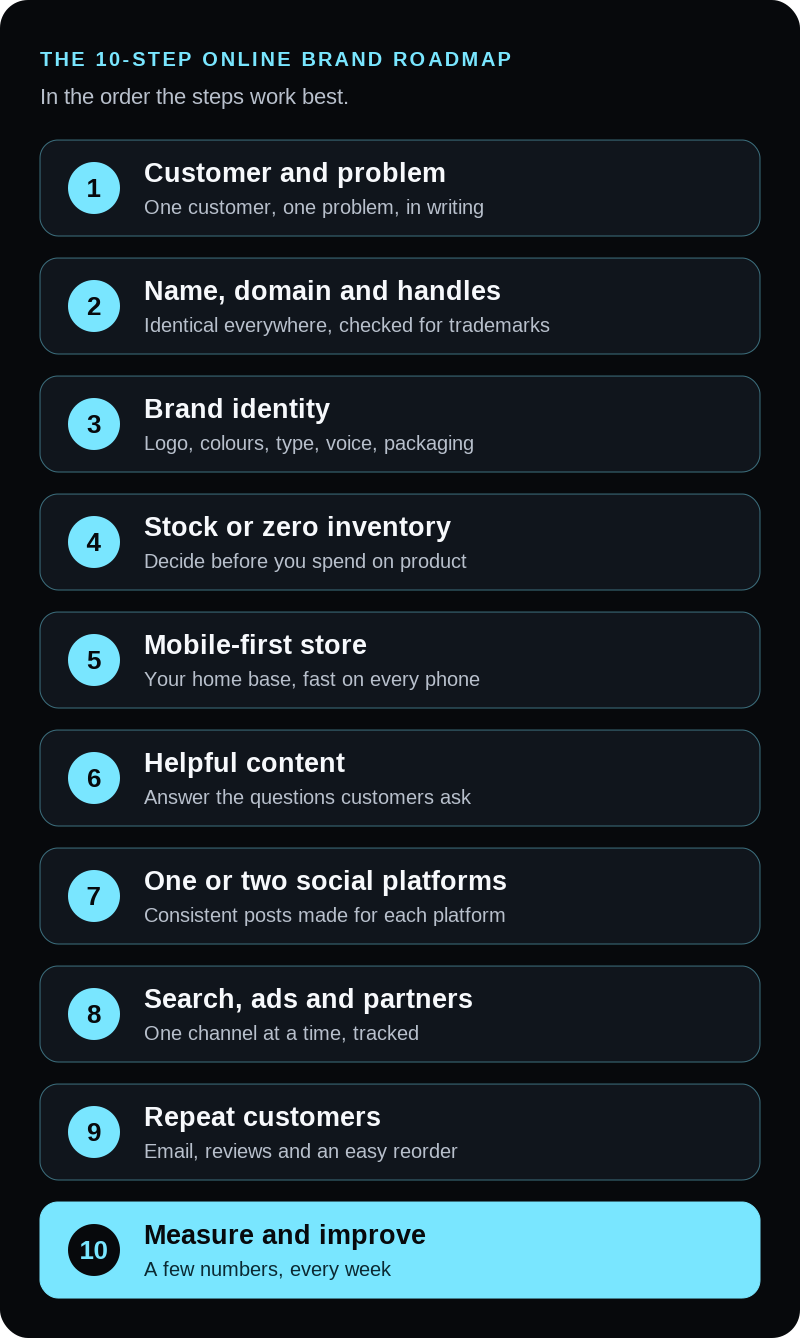
An online brand is more than a logo and a website. It is the full picture a customer forms about you online: what you sell, how it looks, how it sounds, how it arrives and how they feel when they come back. This guide walks through the ten steps we follow when we build brands for founders, in the order they work best.
1. Define who you serve and what problem you solve
Every strong online brand starts narrow. Write one sentence that names your customer and the problem you solve for them, for example “vitamin C skincare for people with sensitive skin in humid cities” rather than “skincare for everyone”. A narrow start makes every later decision easier: your name, your colours, your product range, the platforms you post on and the ads you run.
Before you move on, answer three questions in writing:
- Who is the customer? Age range, location, what they already buy and where they spend time online.
- What do they struggle with? The problem in their words, not yours.
- Who else are they buying from? Three to five competitors, and what you will do differently.
2. Choose a name and secure the domain and handles
Pick a name that is short, easy to spell after hearing it once and not already used by a similar business. Check three things before you commit: the domain (a .com, or a country domain such as .in or .co.uk if you sell locally), the social handles on the platforms you plan to use, and a trademark search in the countries where you will sell. A name you cannot protect is a name you may have to change later, after customers already know it.
Keep the name identical everywhere. If your domain is boostweb.co, your Instagram, LinkedIn and email should match it as closely as possible, so customers and search engines can tell they all belong to the same brand.
3. Build a consistent brand identity
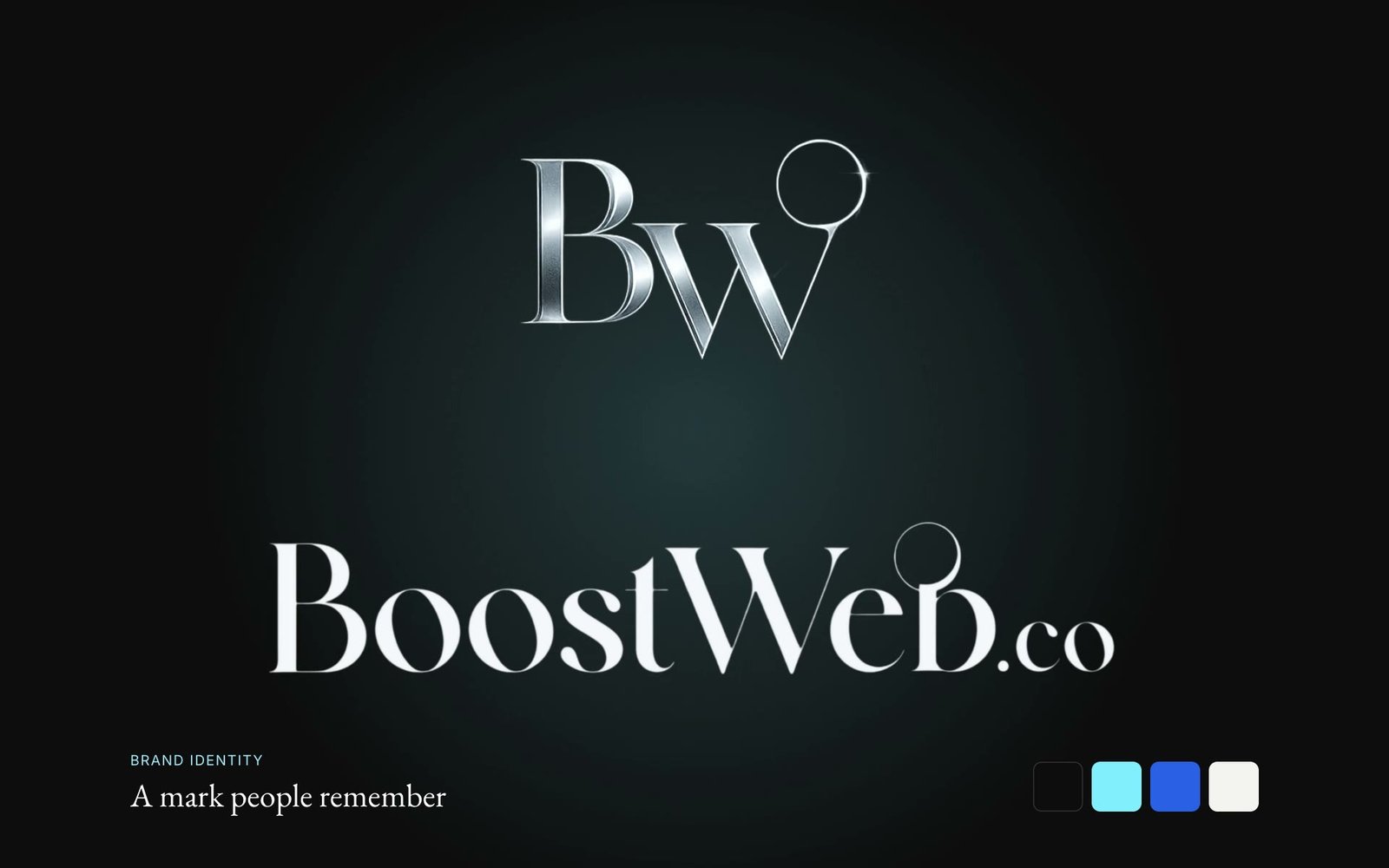
Your brand identity is what makes people recognise you at a glance. At minimum it includes a logo that works from a tiny browser icon to a large banner, a colour system with clear rules, two typefaces, a tone of voice and, for product brands, packaging. Write these down in a short brand guide so every post, product page and parcel looks like it came from the same company.
Consistency matters more than perfection. A simple identity used the same way everywhere builds recognition faster than a clever one used differently on every channel. Our brand identity design service covers this step end to end.
4. Plan how your products are made and delivered
This is the decision that shapes your budget. Decide who makes your products, how many you order to start with, and how each order reaches the customer.
- Making the product: your own production, or a manufacturer who makes it under your brand. Ask for minimum order quantities and lead times in writing.
- Starting quantity: a small first batch keeps cash free for marketing while you learn what sells.
- Storage and packing: pack orders yourself at first, or use a fulfilment partner once volumes grow.
- Delivery: connect a courier service to your store so tracking and returns work from day one.
Whichever route you choose, order samples before launch and check the quality yourself.
5. Launch a fast, mobile-first website or online store
Your website is the one place online you fully control, so it should be the home base everything else points to. Most shoppers browse and buy on their phones, so design for mobile first. A store that sells needs clear product photos, honest descriptions that answer the questions customers ask, visible prices and delivery times, a short checkout with the payment methods your customers use, and pages that load quickly.


Set up the basics search engines need from day one: a clear title and description on every page, a sitemap, and pages that work without errors on any device. Our online store and website development service builds this for you.
6. Create content that answers your customers’ questions
People search before they buy. Content that answers their questions, such as how a product works, how to choose between options or how to use it, brings in visitors who are already interested and shows that you know your subject. Start with the ten questions you hear most from customers and turn each into a page, a guide or a short video.
Write in the same voice as your brand guide, keep each answer specific and update it when facts change. Useful, accurate content builds trust long after you publish it.
7. Show up consistently on the right social platforms
You do not need to be everywhere. Choose the one or two platforms where your customers already spend time and post there consistently, with content made for that platform: short videos and carousels on Instagram, practical posts on LinkedIn for B2B brands, Pinterest for visual and home categories. A monthly content calendar keeps the posting regular and the look consistent.
Reply to comments and messages quickly. On social media, how you respond is part of the brand. If you would rather hand this over, see our social media management service.
8. Drive traffic with search, paid ads and partnerships
Organic content and social posts grow slowly. Paid ads, influencer partnerships and search optimisation speed things up once your store and tracking are ready. Start small: one channel, a clear budget, and tracking that shows which sales each channel brings. Test new ad creative regularly, keep what works and stop what does not.
The aim is not traffic for its own sake. It is customers at a cost that leaves you a profit. Our digital marketing services run ads, SEO, email and influencer outreach together for this reason.
9. Turn first orders into repeat customers
A brand is built on the second order, not the first. Collect email addresses with permission and set up three automated emails before launch: a welcome email, an abandoned-cart reminder and a follow-up after delivery. Make the unboxing feel like your brand, ask for honest reviews and make reordering easy.
Reviews and photos from real customers are some of the strongest trust signals you can show new visitors, so ask for them and display them where people decide to buy.
10. Measure, learn and keep improving
Track a small set of numbers every week: visitors, conversion rate, average order value, cost per customer and repeat purchase rate. Look at which products, pages and channels bring the best customers, then put more effort there. Refresh product pages, photos and guides when something changes, and review your brand guide once a year as the business grows.
Building an online brand is a series of small improvements, not a single launch. If you want a team to keep improving it with you after launch, that is what our 24/7 support is for.
A simple launch timeline
Before you commit money, add up your costs with our free launch budget planner.
Every brand is different, but a typical first launch looks like this:
- Week 1: customer, problem, name, domain and handles (steps 1 and 2).
- Weeks 1 to 4: brand identity and product sourcing, including samples (steps 3 and 4).
- Weeks 3 to 8: website or store build, first content and social setup (steps 5 to 7).
- Launch, then every week: traffic, email, reviews and measurement (steps 8 to 10).
Want this plan tailored to your own brand? Get your free brand plan.
Frequently asked questions
How long does it take to build an online brand?
A first version, with a name, identity, store and social accounts, can launch in a few weeks. Building recognition and repeat customers takes months of consistent work. Treat launch as the start, not the finish.
Can I build an online brand without holding inventory?
Yes. With print-on-demand, dropshipping or private label through a fulfilment partner, products are made or shipped only after a customer orders, under your brand name. You give up some margin and control in exchange for a much lower upfront cost.
Do I need a website if I already sell on social media?
Yes, if you want to own your brand. Social platforms can change their rules or reach at any time. A website gives you a home base you control, your own customer list and a place search engines can send people to.
What is the difference between a brand and a logo?
A logo is one visual mark. A brand is the whole experience: the name, identity, voice, product quality, delivery, customer service and the reputation that builds up from all of them.
Should I build my brand myself or hire an agency?
You can do many steps yourself with modern tools. An agency helps when you want everything built together and quickly, or when you would rather spend your time on product and customers. Look for a team that shows real case studies and explains its process and costs clearly.