







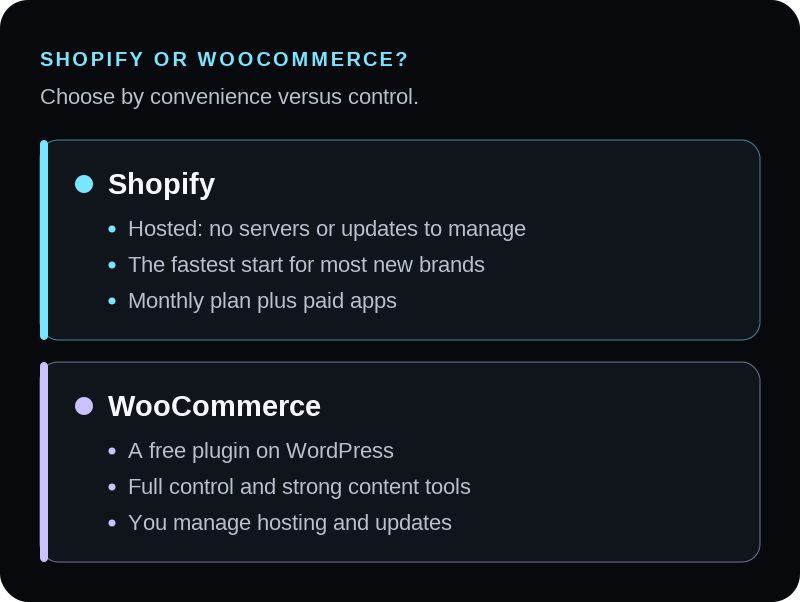
Shopify is a hosted platform: you pay a monthly subscription and Shopify handles hosting, security and updates, so it is the faster, lower-maintenance choice for most new D2C brands. WooCommerce is a free plugin for WordPress: you pay for hosting and extensions and manage updates yourself, in exchange for full control and no platform subscription. Both work with Indian payment gateways such as Razorpay.
Choosing a store platform is one of the first decisions an Indian D2C brand makes, and switching later costs time and money. This guide compares Shopify and WooCommerce on the things that matter for brands selling in India.
Shopify vs WooCommerce at a glance
| Shopify | WooCommerce | |
|---|---|---|
| What it is | Hosted e-commerce platform (software as a service) | Free plugin that turns a WordPress site into a store |
| Hosting and security | Included and managed by Shopify | You choose and pay for hosting; you handle security and updates |
| Running costs | Monthly plan, plus paid apps and themes | Hosting, plus paid plugins and themes as needed |
| Ease of use | Easier for non-technical founders | Flexible, but needs more technical care |
| Customisation | Very good within Shopify’s system | Almost unlimited, since you control the code |
| Content and SEO | Good built-in basics and a blog | Excellent, thanks to WordPress’s content tools |
| Indian payments | Supports Indian gateways such as Razorpay | Supports Indian gateways such as Razorpay through plugins |
| Fulfilment integrations | Wide app ecosystem for shipping and fulfilment partners | Many integrations available; check each partner |
Platform plans, fees and features change, so check current pricing on each platform’s website before you decide.
When Shopify is the better choice
- You want to launch quickly and spend your time on product and marketing, not servers and updates.
- You are selling physical products, especially with print-on-demand or fulfilment partners that offer Shopify apps.
- You do not have a developer to look after the site.
- You value predictable monthly costs over full control.
When WooCommerce is the better choice
- Content is central to your brand and you want WordPress’s publishing and SEO tools.
- You need unusual features, custom checkout flows or deep integration with other systems.
- You have a developer or agency to manage hosting, updates and security.
- You want to avoid a platform subscription and own every part of the stack.
What matters most for Indian D2C brands
Payments and checkout
Indian shoppers expect UPI, cards, net banking and wallets, and many also expect cash on delivery. Make sure your chosen gateway, checkout and shipping setup handle all of these smoothly on mobile. A slow or confusing checkout loses more sales than any platform difference.
Shipping and fulfilment
Check that your courier aggregator or fulfilment partner integrates cleanly with your platform so orders, tracking and returns sync automatically.
Speed on mobile
Most traffic will be on phones, often on mobile data. Choose a light theme, compress images and limit heavy apps or plugins, whichever platform you use.
Taxes and invoices
Both platforms can produce invoices with tax details through settings or extensions. Confirm your GST setup with a chartered accountant.
Our recommendation
For most founders launching a first D2C brand, Shopify is the faster and safer start. Choose WooCommerce when content and customisation matter more than convenience and you have technical support in place. Either way, the platform matters less than the product, the brand and the checkout experience.
Want a store built for you? See our done-for-you Shopify store service.
Frequently asked questions
Is Shopify available in India?
Yes. Shopify serves Indian merchants and supports Indian payment gateways. Check Shopify’s website for current plans and pricing in your currency.
Is WooCommerce really free?
The WooCommerce plugin is free, but you pay for hosting, a domain, and any premium themes, plugins or developer time you need.
Can I move from WooCommerce to Shopify later, or the other way?
Yes, products, customers and orders can be migrated, but it takes planning to keep your URLs, SEO and integrations working. Choosing the right platform at the start saves that work.
Which platform is better for SEO?
Both can rank well. WooCommerce has an edge for content-heavy sites because of WordPress’s publishing tools; Shopify covers the basics well with less setup. Content quality, site speed and links matter more than the platform.
Not sure which fits your brand? We build stores on both. See our online store development service or get your free brand plan.